
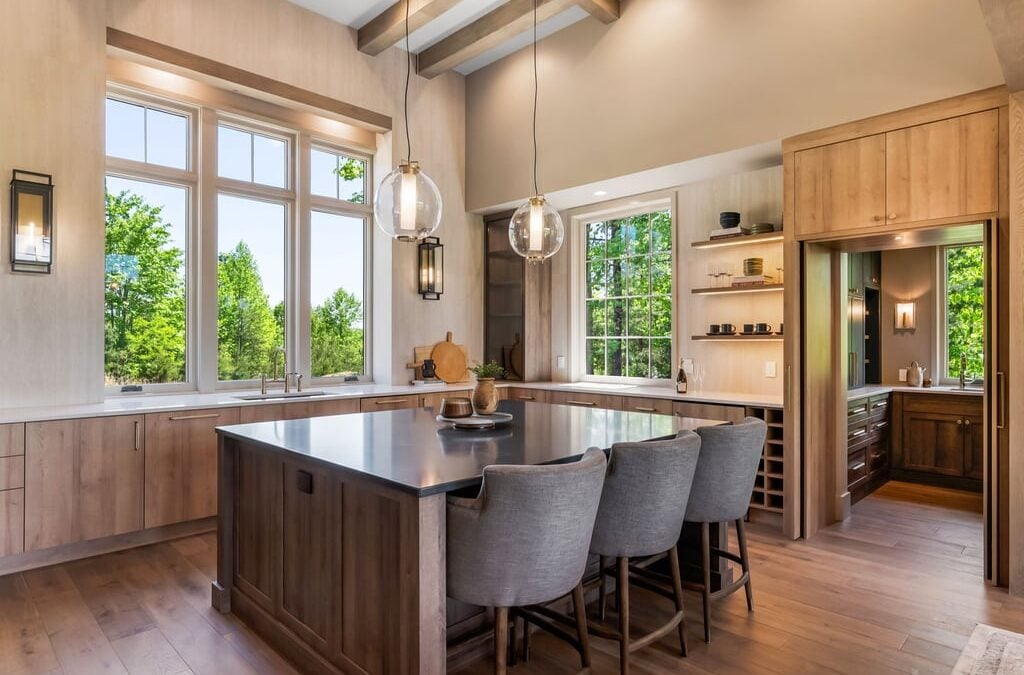
Stock, semi-custom, and custom cabinets differ mainly in price, construction quality, sizing flexibility, and how closely they can be designed around your home. Stock cabinets are the fastest and most affordable, semi-custom cabinets offer more choices, and full custom cabinetry provides the most precise fit and design freedom.
I have worked with homeowners who walk into a showroom, compare two cabinet displays, and ask, “These look almost identical, so why is one kitchen priced at $15,000 and another at $60,000?”
It is a fair question. Most of the differences that affect cost and long-term performance are not immediately visible. They are found inside the cabinet box, in the materials and hardware, in the accuracy of the measurements, and in how the cabinetry is designed and installed.
At ID.ology Interiors & Design, cabinetry is one of the topics we discuss most often with homeowners, builders, and renovators across Asheville and Western North Carolina. Understanding the three main cabinet tiers can help you set a realistic budget and avoid paying for features your home does not need.
What Is the Difference Between Stock, Semi-Custom, and Custom Cabinets?
The simplest difference is how much the cabinetry can be changed to fit your room.
Stock cabinets come in predetermined sizes, styles, and finishes. Semi-custom cabinets begin with standard product lines but allow selected modifications. Full custom cabinets are designed specifically for the dimensions, architecture, and intended function of your space.
For an average-sized kitchen, homeowners may encounter the following general ranges:
- Stock cabinets: Approximately $15,000 to $25,000, with typical lead times of two to three weeks
- Semi-custom cabinets: Approximately $25,000 to $65,000, with typical lead times of four to eight weeks
- Full custom cabinets: Starting around $65,000, with typical lead times of eight to 16 weeks
These figures are planning ranges rather than fixed quotes. The final cabinet cost depends on the kitchen size, cabinet construction, door style, finish, storage features, hardware, installation, and current manufacturer pricing.
What Are Stock Cabinets?
Stock cabinets are mass-produced in standard dimensions. They are generally available in three-inch size increments with a limited selection of door styles, finishes, and interior configurations.
Their greatest advantages are speed and affordability. For a rental property, utility room, budget-conscious renovation, or straightforward kitchen layout, stock cabinetry may be perfectly suitable.
The limitation is that your room must adapt to the available cabinet sizes. If a wall does not divide neatly into standard increments, fillers and unused gaps may be needed. These adjustments can make the completed kitchen feel less integrated with the architecture.
Stock cabinetry may also offer fewer choices for cabinet box construction, hardware, finishes, and low-emission materials. Product quality varies widely, so it is important to look beyond the door style and ask how the entire cabinet is made.
What Are Semi-Custom Cabinets?
Semi-custom cabinetry sits between stock and full custom. It begins with a manufacturer’s standard cabinet line but gives you more flexibility with sizes, door styles, finishes, storage accessories, and selected modifications.
For example, a semi-custom line may allow a 27-inch cabinet where a stock line offers only 24- or 30-inch options. Some manufacturers also permit adjustments to cabinet depth or height.
Semi-custom cabinetry works well for homes with relatively standard layouts where the homeowner wants better materials, more design choices, or a more tailored appearance without moving into fully custom pricing.
You are still working within the manufacturer’s catalog and production system. Although the options may be extensive, they are not unlimited. Specialized dimensions and modifications can also narrow the price difference between semi-custom and full custom cabinetry.
What Are Full Custom Cabinets?
Full custom cabinetry begins with your room rather than a manufacturer’s list of standard sizes. Each cabinet can be designed around the wall dimensions, ceiling height, appliances, architecture, storage needs, and way you use the space.
This level of flexibility can be especially valuable in Western North Carolina homes. We regularly encounter vaulted ceilings, timber-frame details, uneven walls, sloped rooms, and older houses where very little is perfectly square or plumb.
Full custom cabinetry can also provide:
- Cabinet sizes tailored to the available space
- Storage designed around specific routines and belongings
- Better integration with appliances and architectural features
- Greater control over materials, finishes, and hardware
- More flexibility for unusual corners, ceiling conditions, and room proportions
- A cohesive appearance across kitchens, bathrooms, closets, mudrooms, and built-ins
The tradeoff is a higher investment and a longer lead time. More decisions must also be made before production begins, which makes accurate drawings and early planning especially important.
Which Type of Cabinetry Is Best for Your Project?
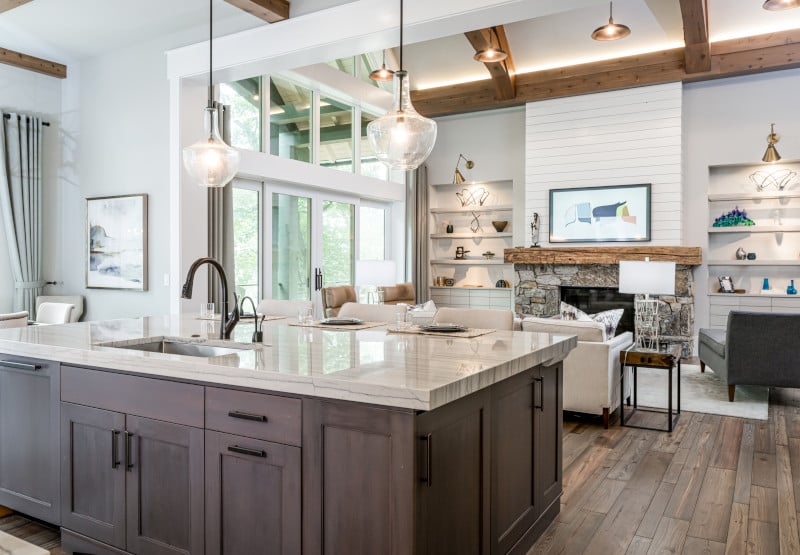
The right cabinet tier depends on the room, budget, timeline, and level of design involvement you want.
When Stock Cabinets May Be Enough
Stock cabinets may make sense when:
- The room has a simple, standard layout
- Cost and speed are the main priorities
- You are improving a rental or basic utility space
- You are comfortable working around fixed cabinet sizes
- You do not need specialized storage or finish options
When Semi-Custom Cabinets May Be the Better Fit
Semi-custom cabinets may be appropriate when:
- You want more finish and door-style choices
- Your layout requires a few size modifications
- You want upgraded construction or storage features
- Your budget sits between stock and full custom
- You are willing to work within a manufacturer’s product line
When Full Custom Cabinets May Be Worth the Investment
Full custom cabinetry may be the right choice when:
- You are building or renovating a high-end home
- The room has unusual dimensions or architectural details
- You want to maximize every available inch
- Your appliances require precise integration
- You have specific storage or accessibility needs
- You want cabinetry to feel like part of the home’s architecture
- Material health and finish specifications are important to you
ID.ology offers both semi-custom and full custom cabinetry services, allowing the design team to recommend the appropriate level for the room rather than forcing every project into one product category.
What Should You Look for Inside a Cabinet?
Cabinet doors receive most of the attention, but the cabinet boxes, drawer systems, hardware, and finishes have a greater effect on daily performance.
One point I often make with clients is this: you look at the cabinet doors, but you live with the cabinet boxes.
Plywood Cabinet Boxes
Quality plywood is commonly selected for kitchens because it holds screws securely and offers good dimensional stability. This can be valuable in Western North Carolina, where indoor humidity may fluctuate throughout the year.
However, the word “plywood” alone does not guarantee quality. The thickness, number of layers, adhesives, joinery, and finish still matter.
Particleboard and Furniture-Grade MDF
Particleboard and MDF are engineered wood products, but they should not be treated as if they are all the same.
Lower-density particleboard is commonly associated with entry-level cabinetry. Furniture-grade, high-density MDF can be a quality material when it is used appropriately and manufactured to suitable emission and performance standards.
Rather than rejecting a material based only on its name, ask about its density, construction, emissions compliance, and intended application.
Solid Wood and MDF Cabinet Doors
For painted cabinetry, high-density MDF center panels can provide a smoother and more stable painted surface. Unlike solid wood, MDF does not expand and contract in the same way, which may reduce visible movement and hairline cracking around door joints.
For stained cabinetry, hardwoods such as oak, maple, and walnut allow the natural grain to become part of the design. High-quality textured laminates can also provide a wood-inspired appearance with strong durability and greater resistance to fading or color variation.
The best option depends on the finish you want, the room conditions, and how the cabinetry will be used.
How Does Cabinetry Affect Indoor Air Quality?
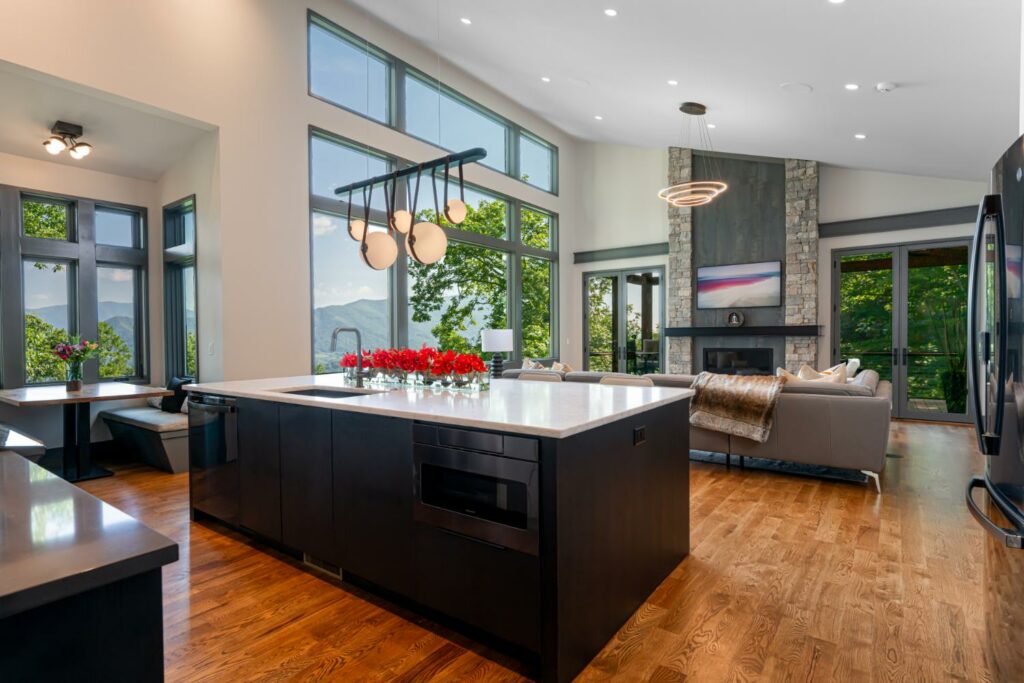
Cabinetry covers a significant amount of surface area and often contains engineered wood, adhesives, paints, stains, and sealants. These materials can affect indoor air quality if they release volatile organic compounds, commonly called VOCs.
This is particularly important in modern, energy-efficient homes. Because these homes are built with tighter envelopes, selecting lower-emission interior materials deserves careful attention from the beginning.
Our approach to healthy home design is not about assuming every manufactured product is unsafe. It is about asking better questions, reviewing available documentation, and choosing materials that support the client’s priorities.
For homeowners who want to understand these choices in greater detail, our guide to choosing non-toxic materials for a healthy home explains what to look for beyond broad marketing labels.
What Is ID.ology’s Baseline Cabinetry Standard?
At a minimum, we prioritize cabinetry lines with documented low-emission construction and finishes. Depending on the manufacturer and product, specifications may include CARB Phase 2-compliant composite wood, low-formaldehyde plywood, and low-emission factory-applied finishes.
The right specification depends on the project. We review cabinetry as part of the home’s larger material plan rather than choosing it in isolation.
Are No-VOC Cabinetry Options Available?
For chemically sensitive clients, families with young children, and homeowners pursuing a highly wellness-focused home, more specialized options may be available.
These can include:
- Cabinet boxes made without added formaldehyde
- Waterborne or plant-based sealants
- Low- or zero-VOC paints and stains
- Carefully reviewed adhesives and interior components
- Responsibly sourced wood products
“No-VOC” and “non-toxic” can be used loosely in product marketing, so documentation matters. Our role is to help clients compare available information and select materials that align with their health, design, and budget priorities.
Where Shaould You Buy Your Cabinets?
The cabinet manufacturer is only one part of the decision. The company that measures, designs, orders, receives, and installs the cabinetry can have just as much influence on the final result.
What Can You Expect From a Big-Box Retailer?
Big-box retailers generally offer accessible pricing and a familiar buying process. They may be appropriate for homeowners managing a DIY project or working with their own installer.
However, responsibility may be divided among the retailer, manufacturer, delivery company, and subcontracted installer. If measurements are incorrect or a component arrives damaged, the homeowner may need to coordinate the solution.
What Does an Independent Cabinet Dealer Provide?
An independent dealer may offer a wider range of cabinet lines and more product knowledge than a general home improvement retailer.
The scope varies by company. Some provide detailed design and installation support, while others focus primarily on product sales. Before purchasing, ask who is responsible for field measurements, appliance coordination, receiving, damage claims, installation, and final adjustments.
How Is ID.ology’s Turnkey Cabinetry Service Different?
Our cabinetry process is connected to the complete design of the home. The same team considers room flow, elevations, finishes, appliances, lighting, furnishings, and architectural details.
Depending on the project scope, our turnkey service may include:
- Field measurements and space planning
- Cabinetry concepts and architectural drawings
- Finish and hardware selections
- Appliance and fixture coordination
- Low- or zero-VOC material specifications
- Ordering and delivery oversight
- Receiving and product inspection
- Installation coordination
- Final hardware and soft-close adjustments
This creates continuity from the first drawing through installation. If an issue arises, the homeowner is not left trying to determine which vendor should solve it.
ID.ology’s integrated approach was also part of our work on the House Beautiful 2024 Whole Home, where interior design, custom home construction, and detailed material decisions had to work together across the entire residence.
Is Custom Cabinetry Worth the Cost?
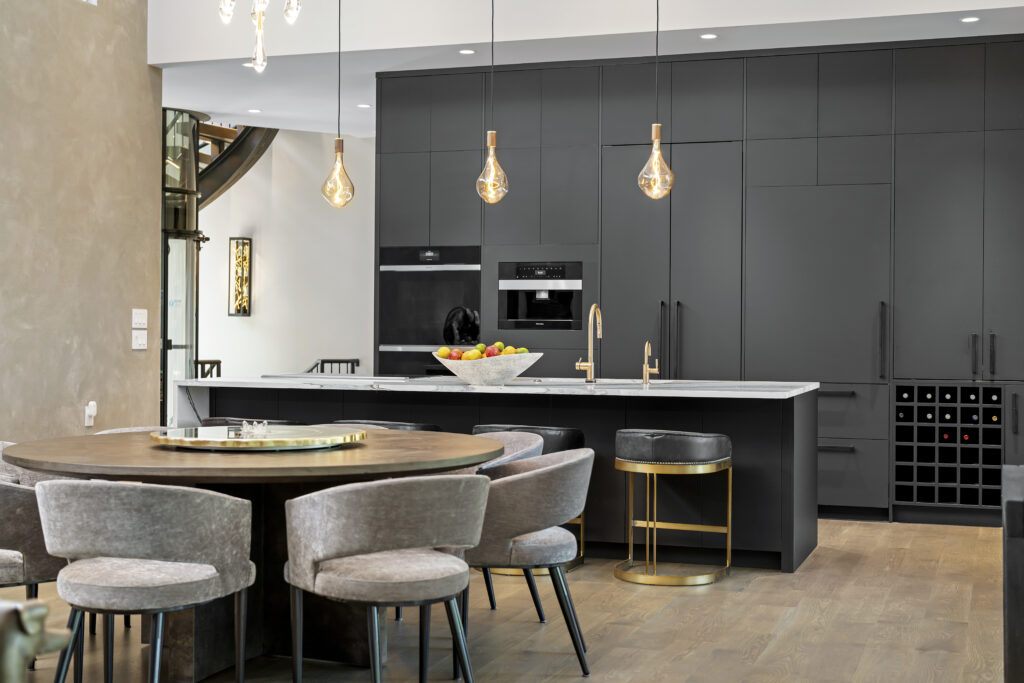
Custom cabinetry can be worth the investment when it improves the room’s function, uses difficult space effectively, supports long-term performance, or achieves a level of architectural integration that standard cabinets cannot provide.
That does not mean every cabinet in every home needs to be fully custom. In many projects, the smartest solution is a thoughtful mix. Full custom cabinetry might be used in the kitchen or primary bathroom, while semi-custom cabinetry may serve a secondary bath, laundry room, or guest area.
Good design is not about choosing the most expensive option. It is about knowing where precision, material quality, and customization will make a meaningful difference.
Cabinetry supports countertops, houses appliances, stores everyday essentials, and is opened and closed repeatedly for years. Looking at its expected use and lifespan, rather than the initial price alone, gives you a more accurate picture of its value.
What Should You Ask Before Ordering Cabinets?
Before signing a cabinetry agreement, ask:
- What material is used for the cabinet boxes?
- How are the drawers and shelves constructed?
- What hardware and drawer glides are included?
- Which modifications are possible?
- Are fillers likely to be visible?
- Who verifies the field measurements?
- Who coordinates the cabinetry with appliances and fixtures?
- What emission or material documentation is available?
- Who receives and inspects the order?
- Who handles damaged or incorrect components?
- Is installation included?
- Who is responsible for final adjustments?
- What is the estimated production and installation timeline?
Clear answers make it easier to compare proposals fairly. A lower price may cover only the cabinet boxes, while a higher proposal may include design, modifications, delivery management, installation, and project accountability.
Frequently Asked Questions About Cabinetry
Are Semi-Custom Cabinets as Good as Custom Cabinets?
Semi-custom cabinets can provide strong quality and attractive finishes when the product line suits the room. The main difference is flexibility. Custom cabinetry allows greater control over dimensions, materials, storage, and architectural details.
How Long Does It Take to Order New Cabinets?
Stock cabinets may be available within two to three weeks. Semi-custom orders often require four to eight weeks, while full custom cabinetry may take eight to 16 weeks or longer. Timelines can change based on the manufacturer, finish, modifications, shipping, and installation schedule.
Are Plywood Cabinets Better Than MDF Cabinets?
Plywood is commonly preferred for cabinet boxes because of its strength and ability to hold fasteners. High-density furniture-grade MDF can also perform well in suitable applications, particularly painted door panels. Construction quality matters more than the material name alone.
Do Custom Cabinets Add Value to a Home?
Well-designed cabinetry can support resale appeal by improving storage, function, durability, and visual continuity. Its value depends on the quality of the design and installation, how well it suits the home, and whether the investment is appropriate for the property.
Can Custom Cabinets Be Made With Low- or Zero-VOC Materials?
Yes. Depending on the cabinetmaker and product line, options may include low-emission engineered wood, no-added-formaldehyde construction, waterborne finishes, and low- or zero-VOC paints and stains. Ask for documentation when material health is a priority.
Can ID.ology Design Cabinetry Outside the Kitchen?
Yes. Cabinetry can be designed for bathrooms, closets, mudrooms, laundry rooms, home offices, libraries, entertainment spaces, bars, and other areas that need integrated storage.
Ready to Plan Your Cabinetry Project?
Getting the cabinetry plan right early can protect both your budget and the design of your home. It also gives the design team time to coordinate the floor plan, appliances, finishes, storage, materials, and installation before construction reaches the cabinetry stage.
ID.ology works with homeowners, builders, and renovators across Western North Carolina, Upstate South Carolina, Eastern Tennessee, and select projects beyond the region.
Schedule a Cabinetry and Space Consultation to review your floor plan, discuss realistic budget ranges, compare semi-custom and full custom options, and explore materials suited to your home.